Afterglow
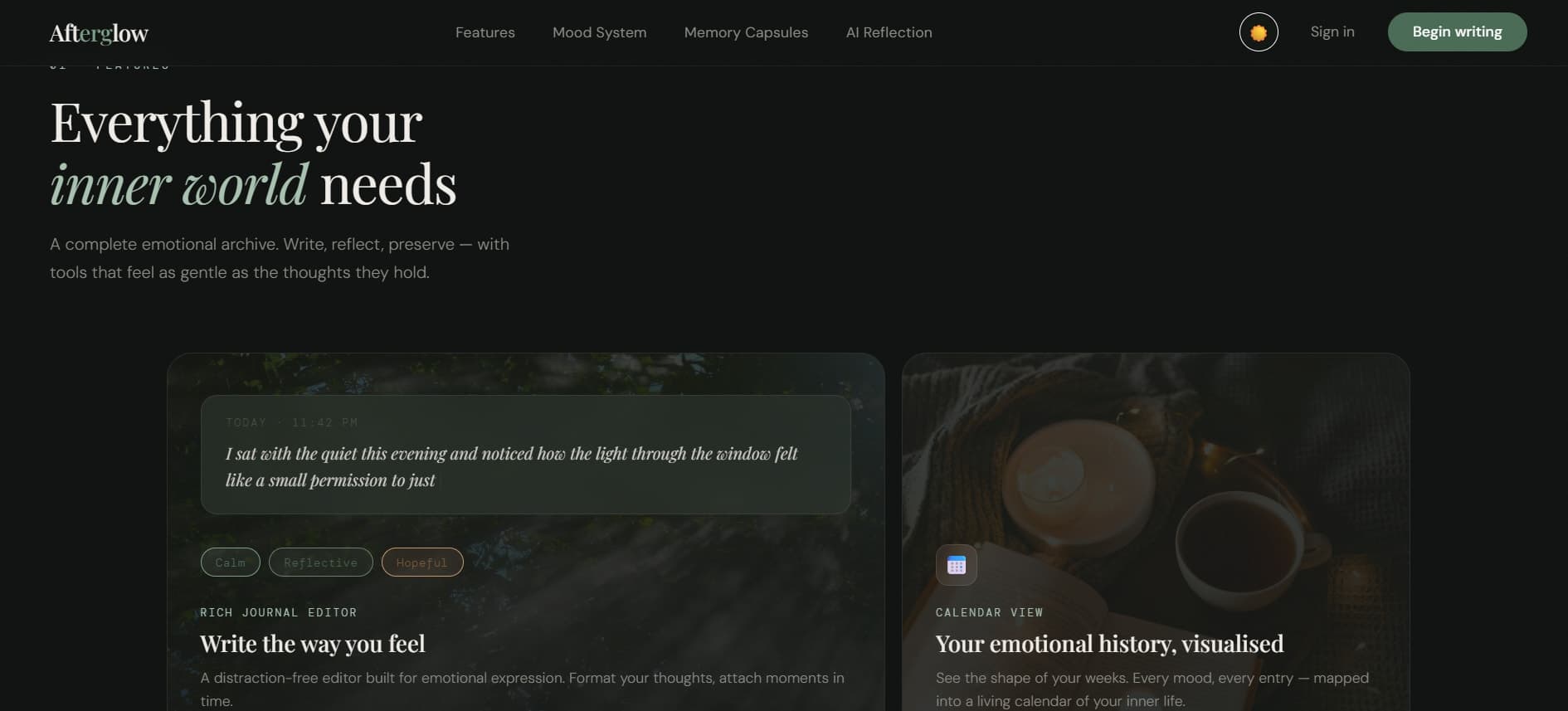
A cinematic frontend experience focused on immersive animations, premium UI design, responsive architecture, and motion-driven interactions using GSAP, modern CSS techniques, and vanilla JavaScript.
Screenshots


Key Metrics
Frontend Experience
Static Client-Side Website
GSAP
Dark · Light
Overview
Afterglow is a cinematic frontend project designed to explore immersive interaction design, animation systems, visual storytelling, and premium user interface architecture. The project focuses on delivering an engaging digital experience through motion, typography, layering effects, and responsive layouts.
Problem
Creating visually immersive web experiences requires balancing animation, responsiveness, performance, and maintainability. Building rich interactions without relying on frontend frameworks also presents architectural and design challenges.
Solution
Developed a motion-driven frontend experience using GSAP, modular HTML/CSS/JavaScript architecture, responsive layouts, theme switching, and modern UI techniques such as glassmorphism and layered visual effects to create a cinematic browsing experience.
Architecture
Static frontend architecture consisting of separated HTML, CSS, and JavaScript layers. GSAP manages animation orchestration, CSS variables power the design system and theme switching, while responsive layouts ensure compatibility across devices and screen sizes.
Challenges
- Coordinating multiple animation timelines.
- Maintaining smooth rendering performance.
- Balancing visual aesthetics with responsiveness.
- Implementing premium UI effects without excessive complexity.
- Managing blur and glassmorphism rendering costs.
- Designing scalable frontend architecture without frameworks.
Lessons Learned
- Frontend interaction engineering.
- Animation orchestration using GSAP.
- Responsive UI architecture principles.
- Visual hierarchy and storytelling techniques.
- CSS variable-based design systems.
- Premium user experience design patterns.
- Performance considerations for animation-heavy interfaces.
- Structuring scalable frontend projects without framework abstractions.
Future Improvements
- React or Next.js migration.
- Component-based architecture.
- Dynamic content management.
- Accessibility improvements.
- Mobile interaction enhancements.
- Page transition system.
- Audio-reactive experiences.
- Advanced theme customization.
- Backend integration.
- CMS support.