Coditor
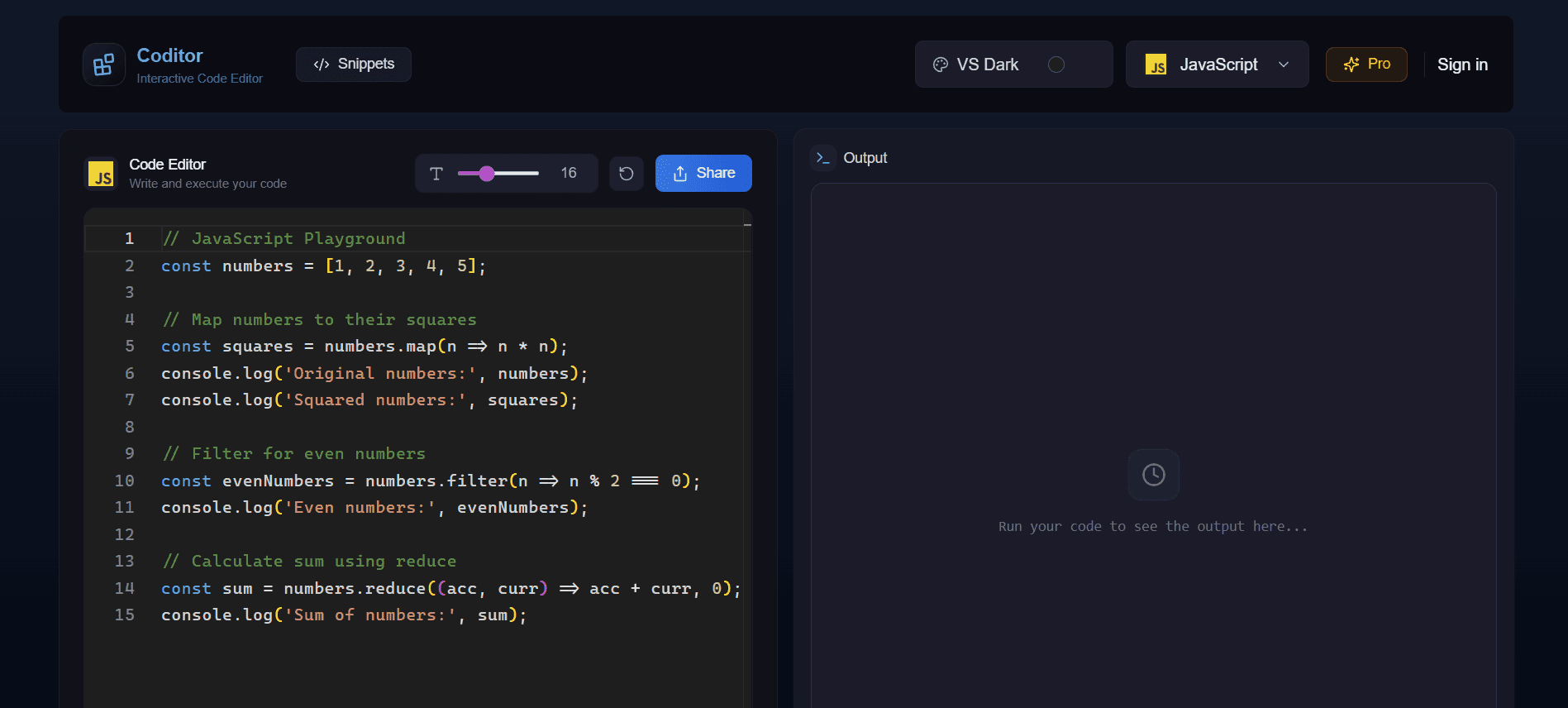
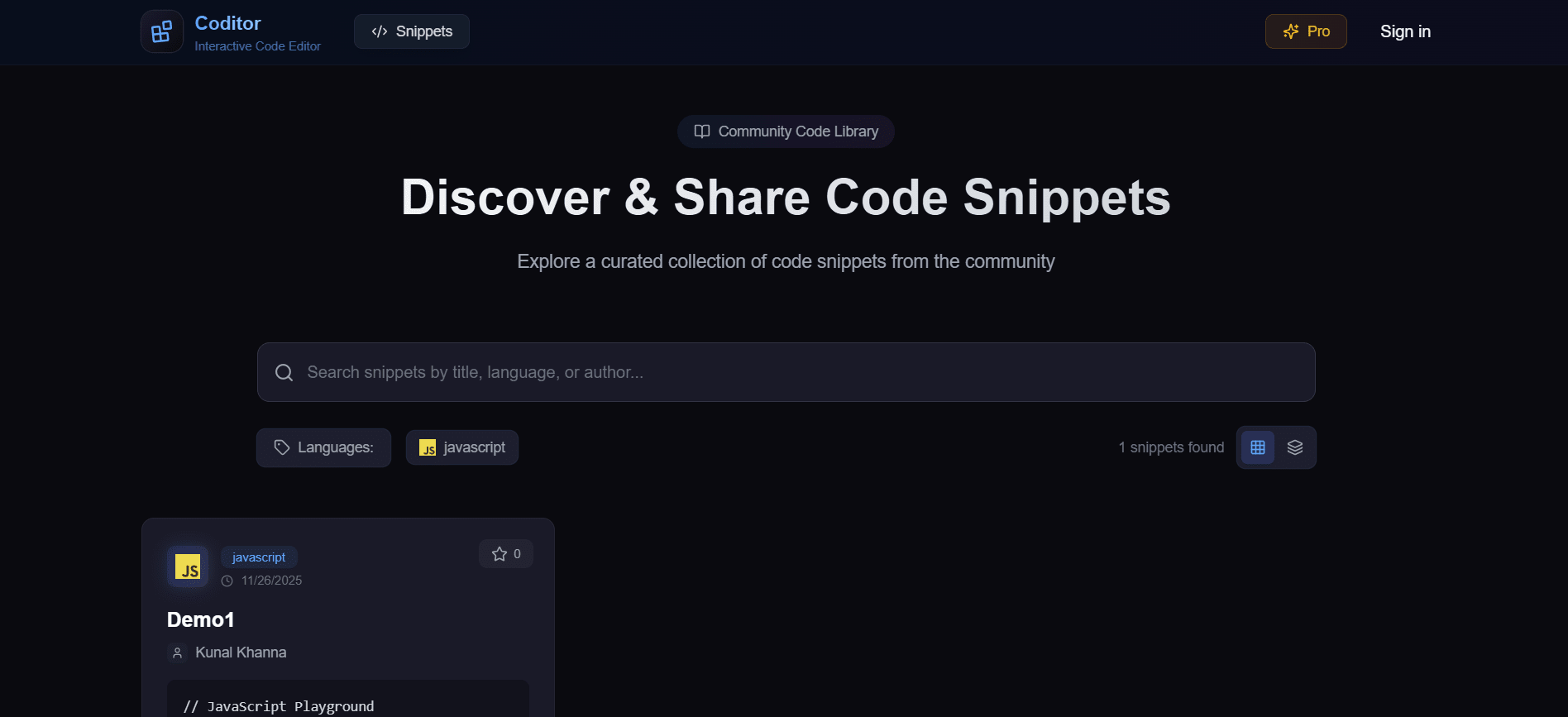
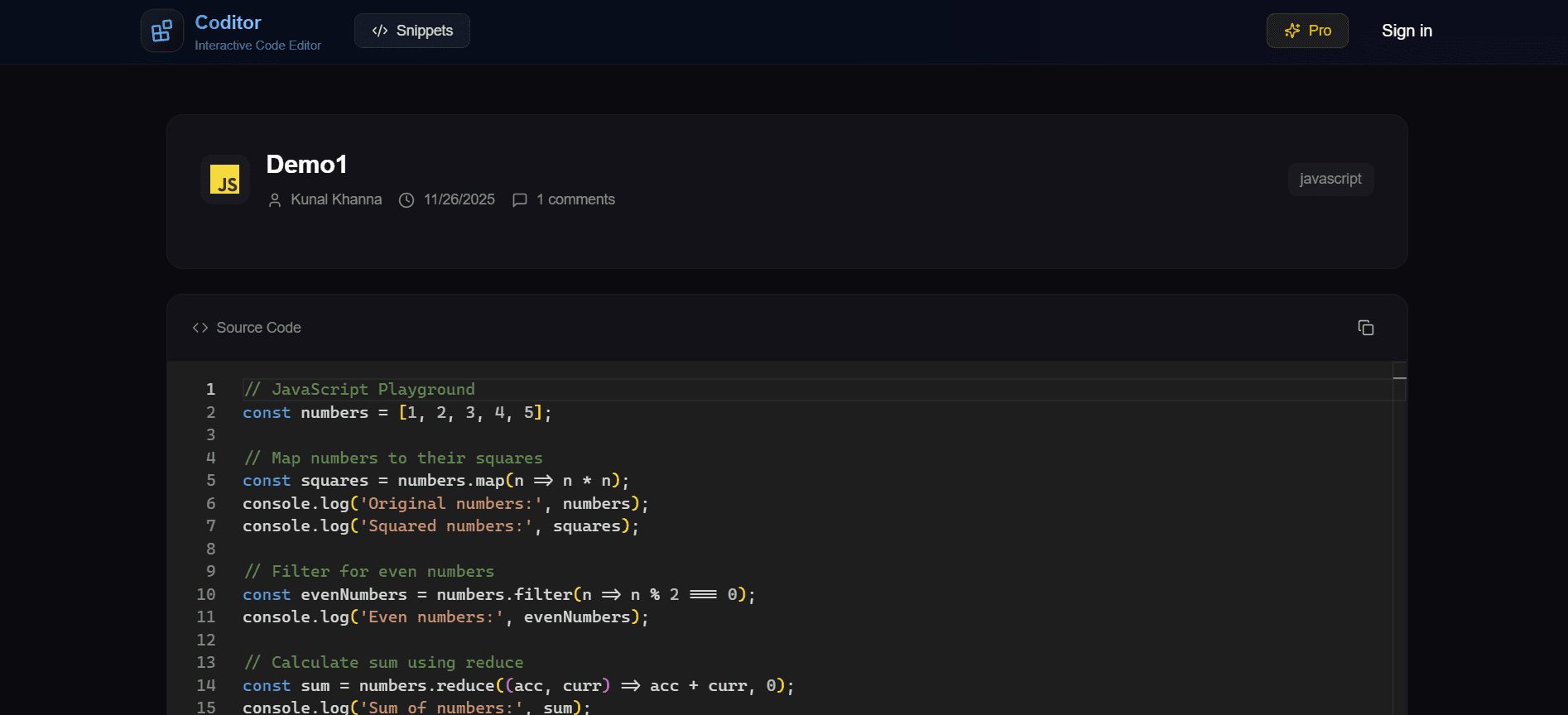
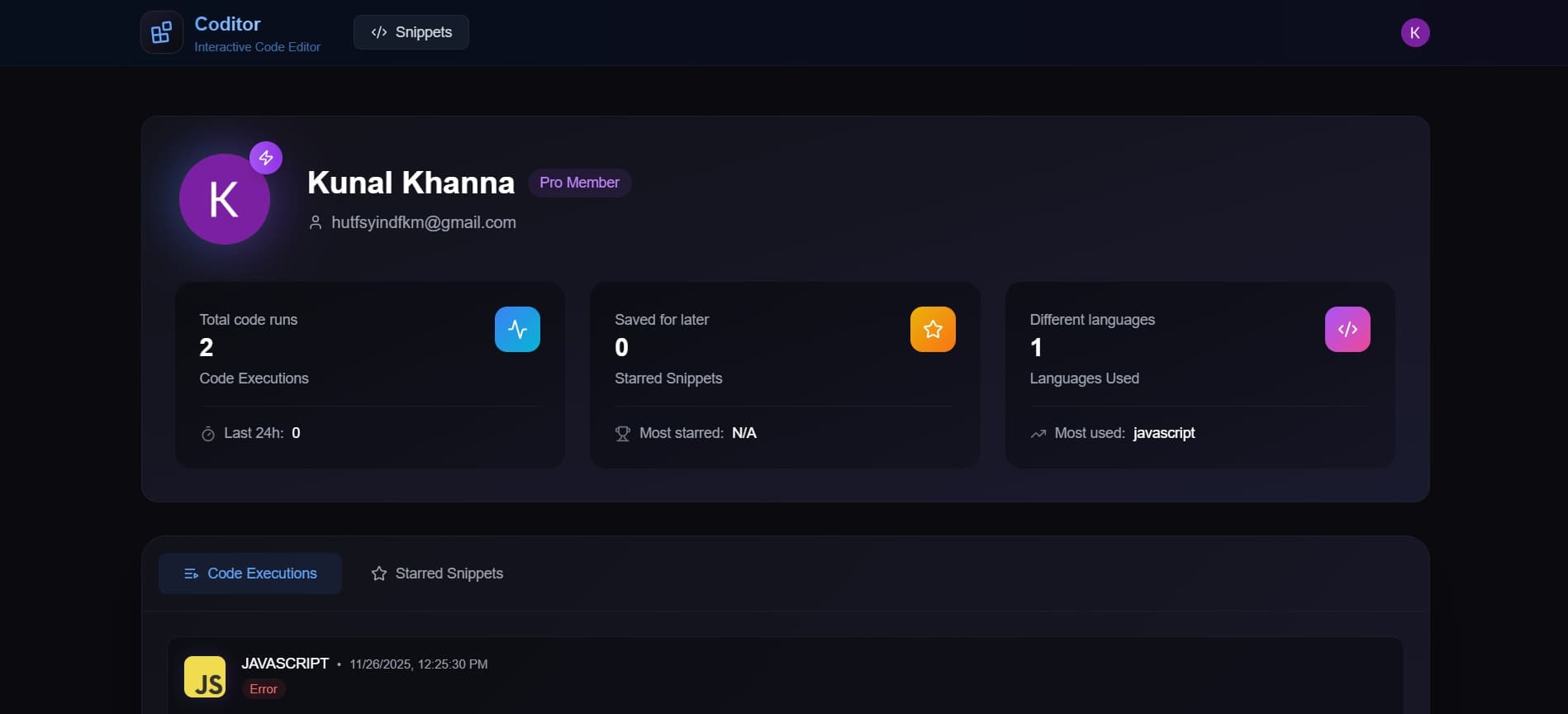
A full-stack browser-based developer platform that combines Monaco-powered code editing, multi-language code execution, community snippet sharing, execution history, and subscription-based feature access within a reactive real-time architecture.
Screenshots
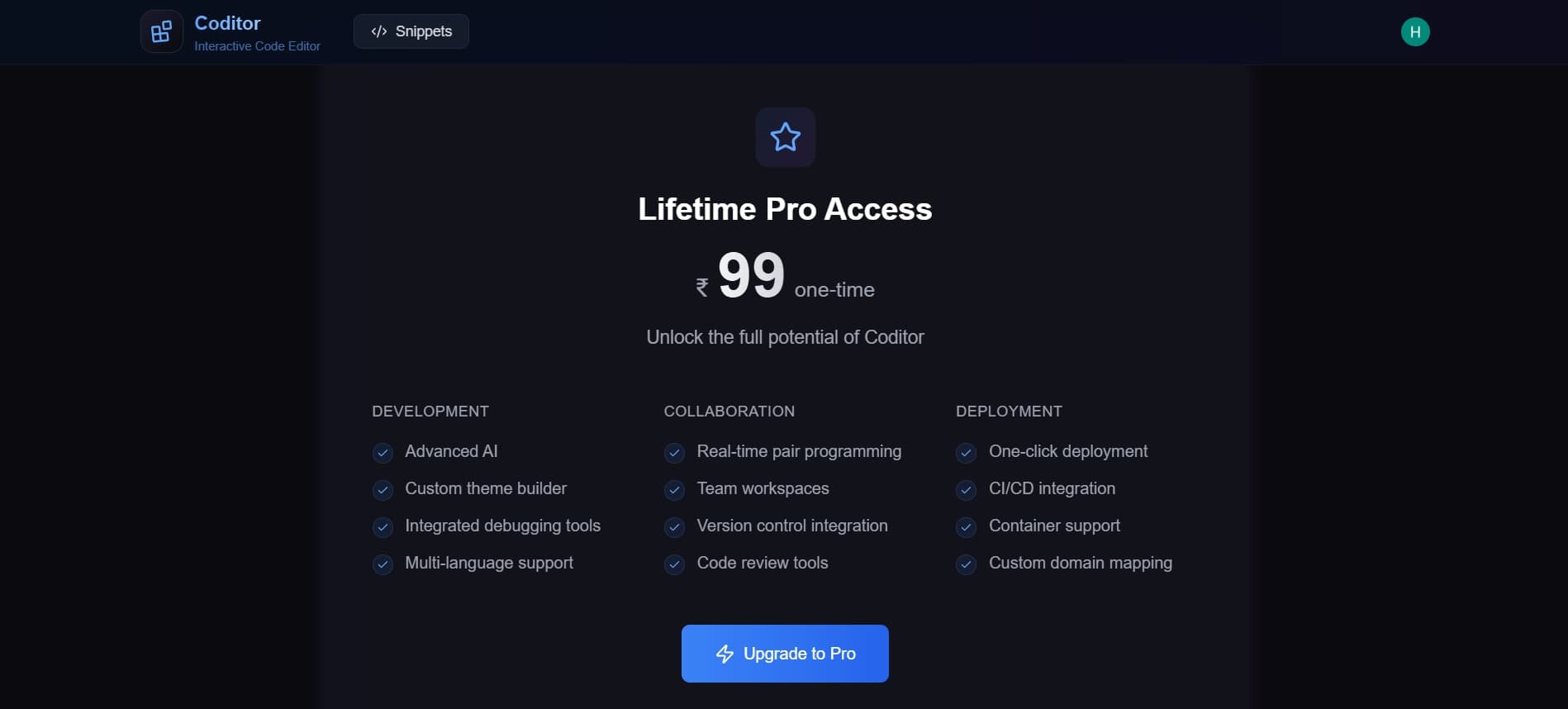
Key Metrics
10+
Reactive Full-Stack Platform
Clerk
LemonSqueezy
Convex
Overview
Coditor is a browser-based coding platform that enables users to write, execute, save, and share code snippets while participating in a developer community. The platform combines code execution, snippet sharing, commenting, starring, execution history tracking, and subscription-based premium features into a unified developer experience. :contentReference[oaicite:0]{index=0}
Problem
Most online code editors either focus only on code execution or lack persistence, collaboration, and community-driven functionality. Developers need a platform that combines coding, sharing, learning, and engagement in a single environment.
Solution
Built a full-stack developer platform that supports multi-language code execution, community snippet publishing, comments, execution history, and premium feature access while leveraging real-time updates and reactive data synchronization.
Architecture
Next.js powers the frontend while Convex serves as both backend and database layer through queries, mutations, and real-time subscriptions. Clerk manages authentication, Piston handles code execution, and LemonSqueezy manages subscription billing and payment workflows. :contentReference[oaicite:1]{index=1}
Challenges
- Integrating Monaco Editor into a React application.
- Managing state synchronization between editor and backend.
- Implementing reactive real-time data updates using Convex.
- Handling multi-layer execution error management.
- Building secure webhook processing workflows.
- Managing subscription-based feature gating.
- Designing scalable community snippet interactions.
Lessons Learned
- Reactive database architecture using Convex.
- Monaco Editor integration patterns.
- Authentication and authorization design.
- Webhook verification and payment processing.
- State management using Zustand.
- Real-time subscription systems.
- Developer tooling architecture.
- Tradeoffs of third-party execution providers.
Future Improvements
- Snippet pagination.
- Execution timeout controls.
- API rate limiting.
- Error boundaries.
- Full-text search.
- Collaborative editing.
Development Log & Engineering Decisions
When Your Execution Engine Goes Dark — The Piston API Deprecation
Documenting the moment the public Piston API became whitelist-only and what it exposed about building on free public infrastructure.
When a Public API Dies Mid-Project — Piston to Wandbox Migration
The public Piston code execution API went whitelist-only in February 2026. Notes on what broke, how it was fixed, and the broader lesson about third-party API dependencies.