Finance Tracker App
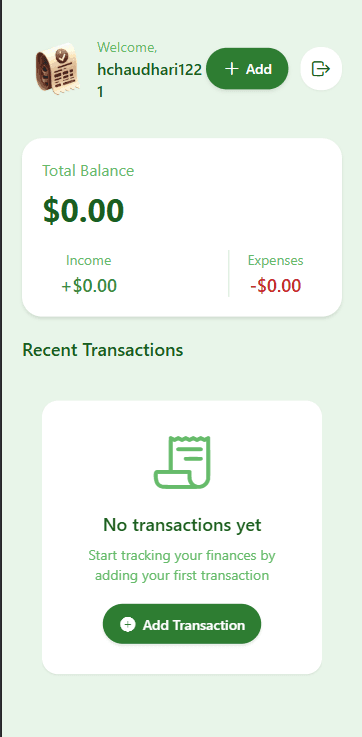
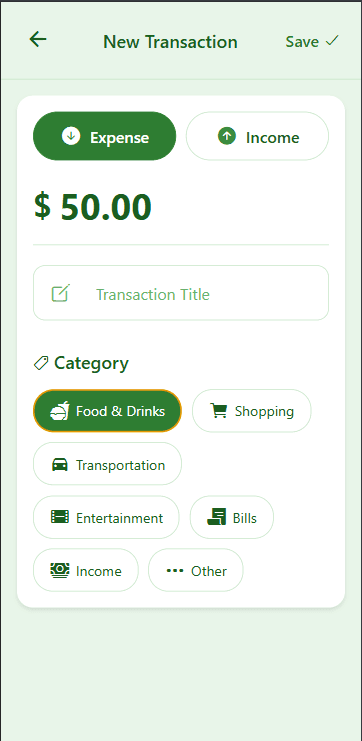
A cross-platform personal finance management application that allows users to track income and expenses, monitor balance summaries, manage transaction history, and securely access financial data through a mobile-first architecture built on React Native and serverless infrastructure.
Screenshots


Key Metrics
Android · iOS
100 Requests / 60 Seconds
PostgreSQL
Clerk OTP + JWT
Serverless Mobile Architecture
Overview
Personal Finance Tracker is a mobile-first finance management application that enables users to record income and expenses, track balances, manage transaction history, and maintain secure financial records. The project explores mobile development, REST API design, authentication, database architecture, and rate limiting within a modern serverless ecosystem. :contentReference[oaicite:0]{index=0}
Problem
Individuals often struggle to monitor spending habits and maintain organized financial records. Building a personal finance solution also requires solving challenges related to authentication, data persistence, mobile navigation, serverless infrastructure, and secure transaction management.
Solution
Developed a cross-platform finance tracker that allows users to securely authenticate, create categorized transactions, view real-time balance summaries, manage financial records, and access data through a scalable serverless backend architecture.
Architecture
Mobile application built using React Native and Expo Router with Clerk-based authentication. The backend is powered by Express and hosted on Render, while PostgreSQL is provided through Neon Serverless. Upstash Redis implements sliding-window rate limiting, and secure session management is handled through Clerk and Expo Secure Store. :contentReference[oaicite:1]{index=1}
Challenges
- Understanding serverless database connectivity patterns.
- Implementing authentication guards using Expo Router.
- Managing React hook dependencies and referential stability.
- Integrating Clerk authentication in a native mobile environment.
- Implementing sliding-window rate limiting.
- Designing REST APIs for mobile-first workflows.
- Handling serverless deployment constraints and cold starts.
Lessons Learned
- Serverless-first application architecture.
- Mobile authentication and secure token storage.
- REST API design and middleware architecture.
- PostgreSQL schema design and database interactions.
- Expo Router file-based navigation patterns.
- Rate limiting algorithms and abuse prevention.
- React Native performance optimization techniques.
- Security considerations in mobile applications.
Future Improvements
- Backend JWT verification and authorization middleware.
- Spending analytics and visual charts.
- Monthly budget tracking.
- Transaction search and filtering.
- CSV export functionality.
- Recurring transaction automation.
- Push notifications.
- Offline-first synchronization.
- Multi-currency support.
- Dark mode implementation.
- Pagination and query optimization.