FloodAlert India
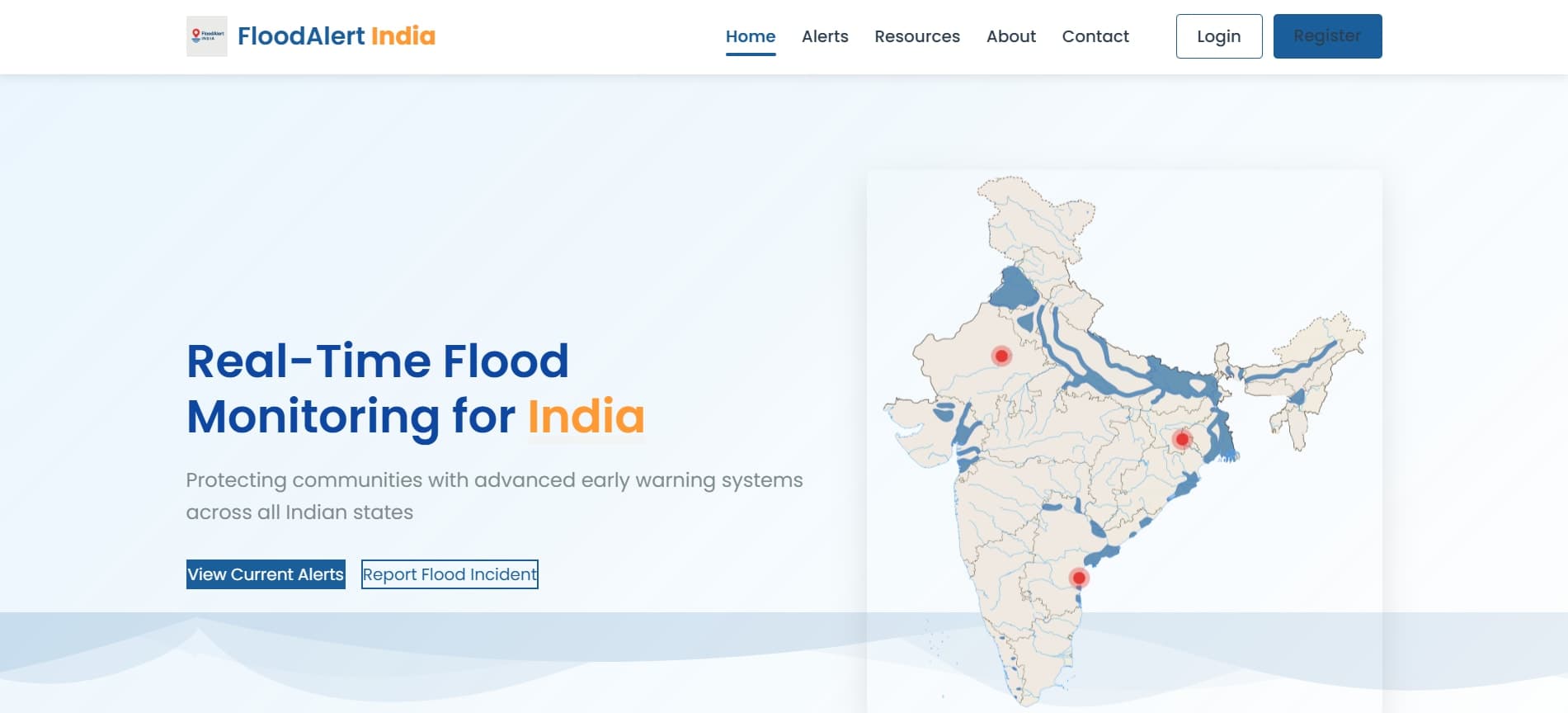
A multi-role flood monitoring and emergency response platform designed to facilitate disaster communication between citizens, local authorities, and administrators through flood alerts, incident reporting, and emergency coordination workflows.
Screenshots

Key Metrics
Citizen · Authority
Servlet-Based MVC Architecture
MySQL
Apache Tomcat
Role-Based Login
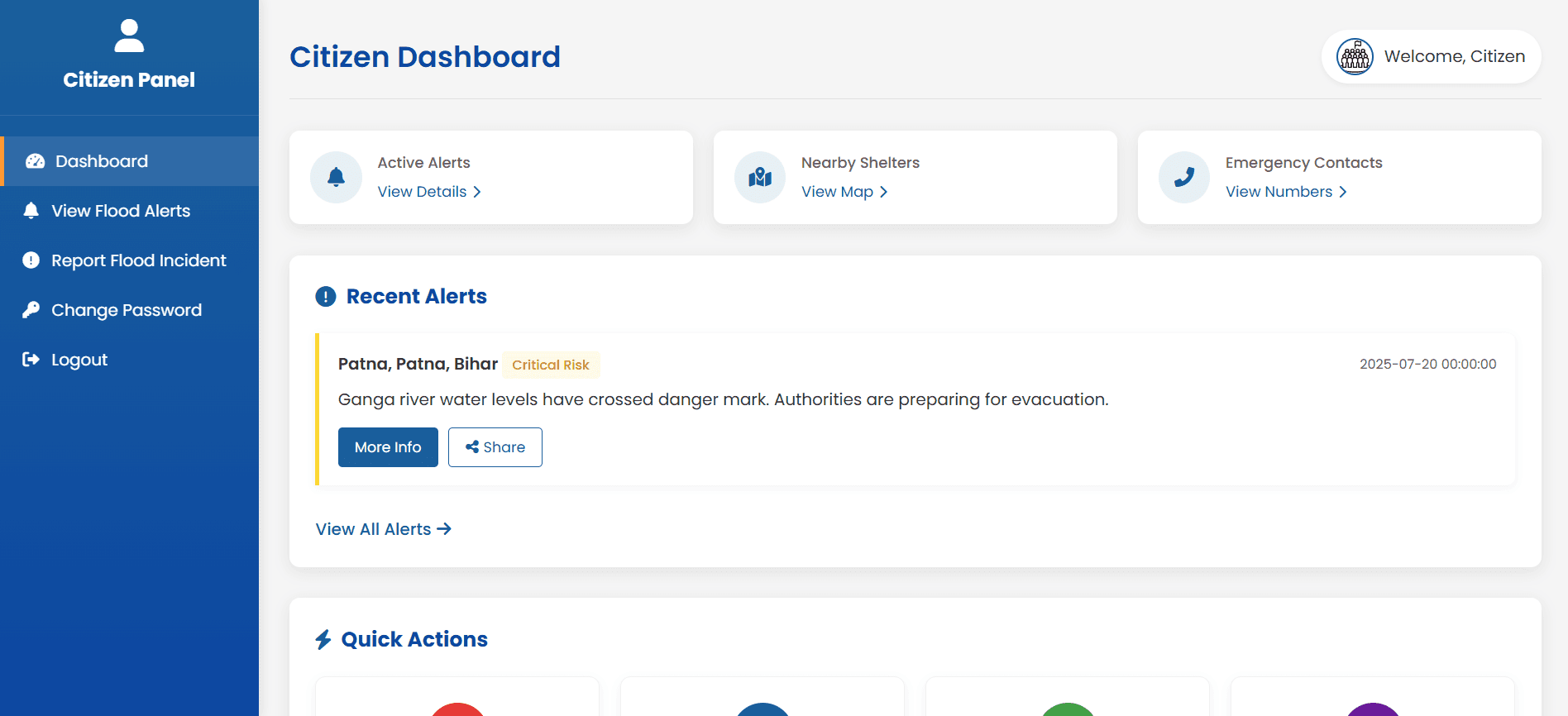
Flood Incident Reporting
Overview
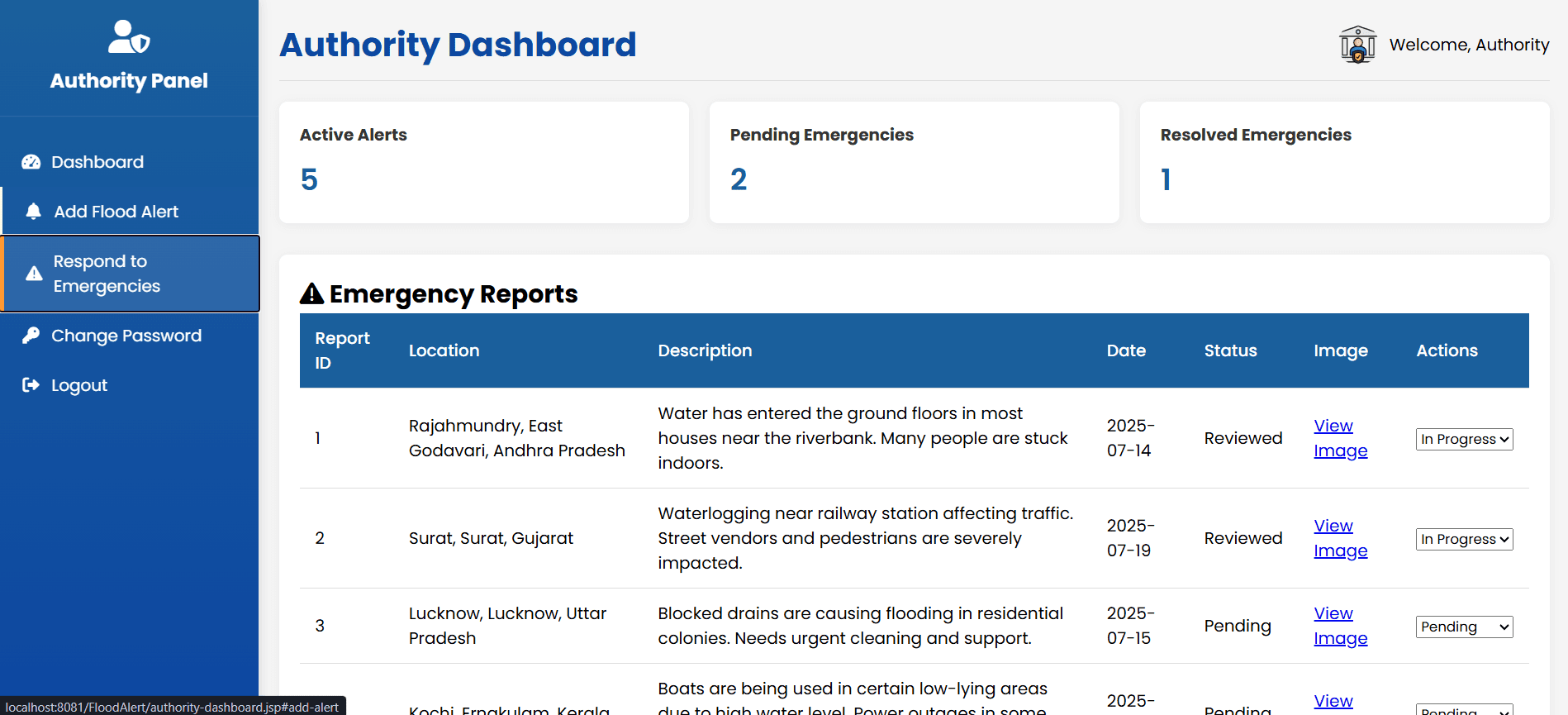
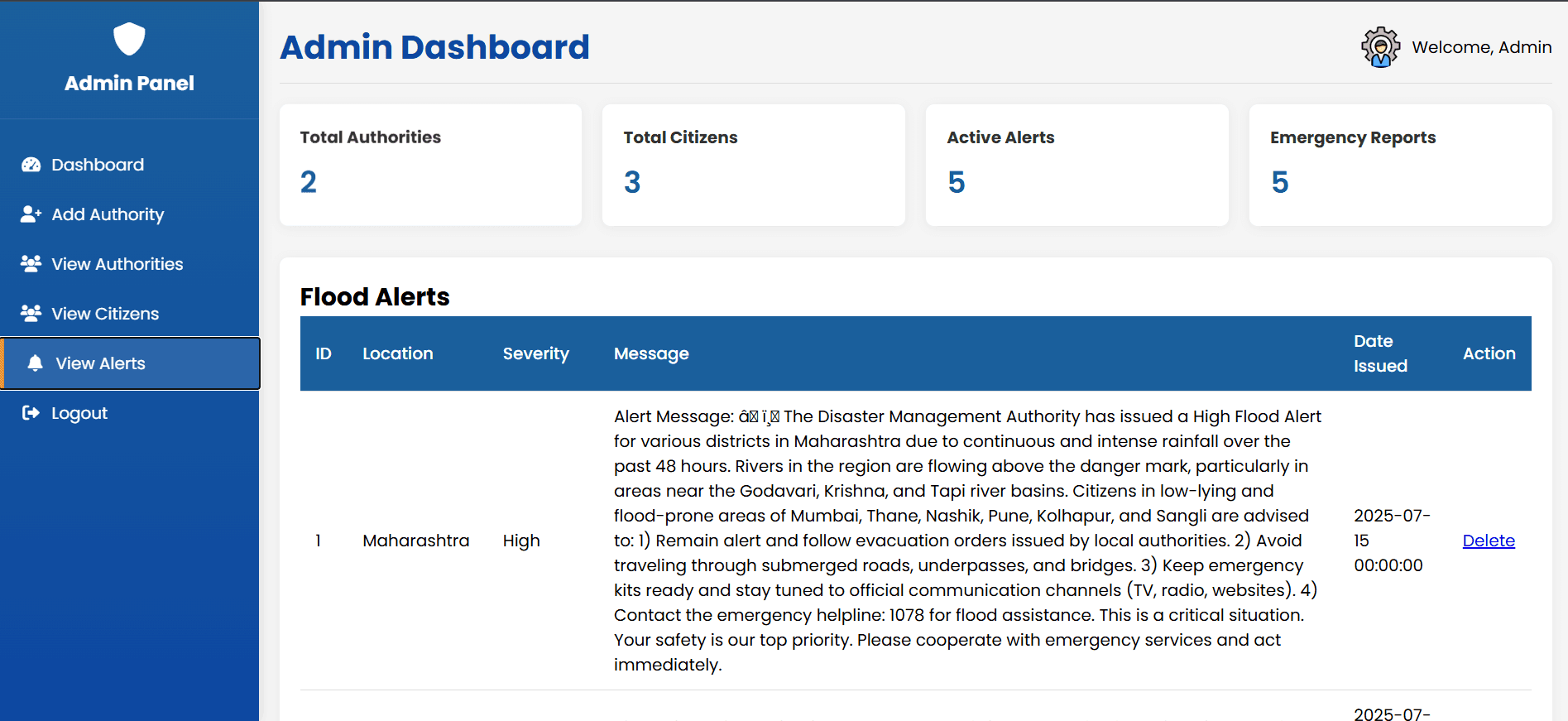
FloodAlert India is a disaster management platform that enables citizens to report flood incidents, authorities to issue alerts and manage emergency situations, and administrators to oversee system operations. The application models the key workflows required for flood monitoring, communication, and emergency response coordination.
Problem
Flood disasters often expose communication gaps between citizens, local authorities, and emergency management teams. A centralized platform is needed to facilitate alert dissemination, incident reporting, and coordinated response efforts.
Solution
Built a role-based web application that allows citizens to submit flood reports, authorities to issue alerts and manage emergencies, and administrators to manage users and monitor platform activity through dedicated dashboards.
Architecture
Java EE architecture built using Java Servlets for request handling, JSP for server-side rendering, JDBC for database communication, and MySQL for data storage. Apache Tomcat acts as the servlet container, while individual servlets handle authentication, reporting, alert creation, and emergency management workflows.
Challenges
- Implementing multi-role routing and access control.
- Understanding the Java Servlet lifecycle.
- Managing JDBC database connections safely.
- Designing relational schemas for disaster management workflows.
- Coordinating flood reporting and alert management processes.
- Handling request-response workflows without modern frameworks.
- Identifying security flaws during architecture review.
Lessons Learned
- Java Servlet lifecycle mechanics.
- JDBC connection management patterns.
- Role-based application architecture.
- Authentication versus session management concepts.
- JSP rendering and server-side architecture tradeoffs.
- Relational database schema design.
- Security auditing and vulnerability identification.
- Multi-threaded server behavior in Java web applications.