SkillSwap — Community Skill Exchange Platform
A community-driven skill exchange platform where users trade knowledge and expertise through a virtual credit economy instead of monetary transactions, enabling people to teach, learn, and collaborate within a structured peer-to-peer ecosystem.
Screenshots
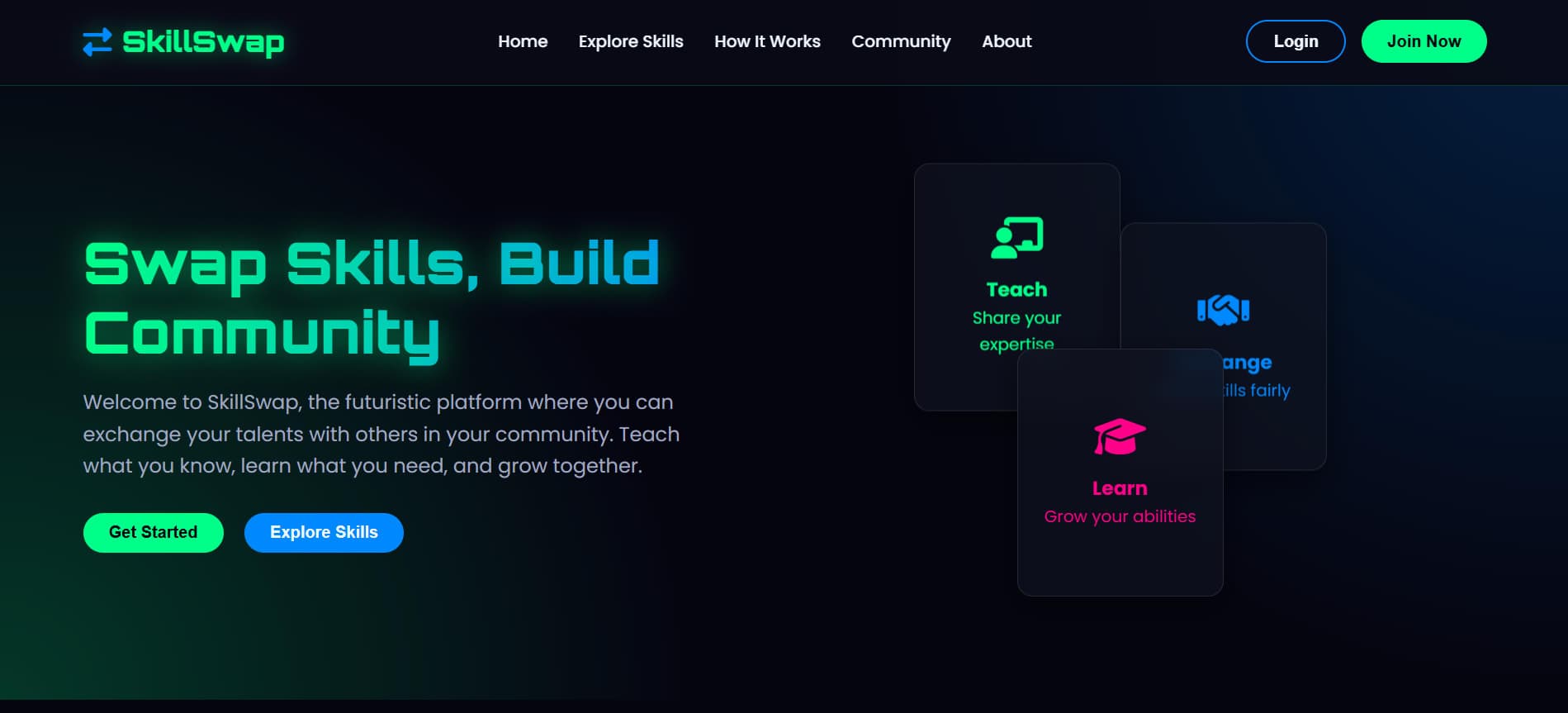
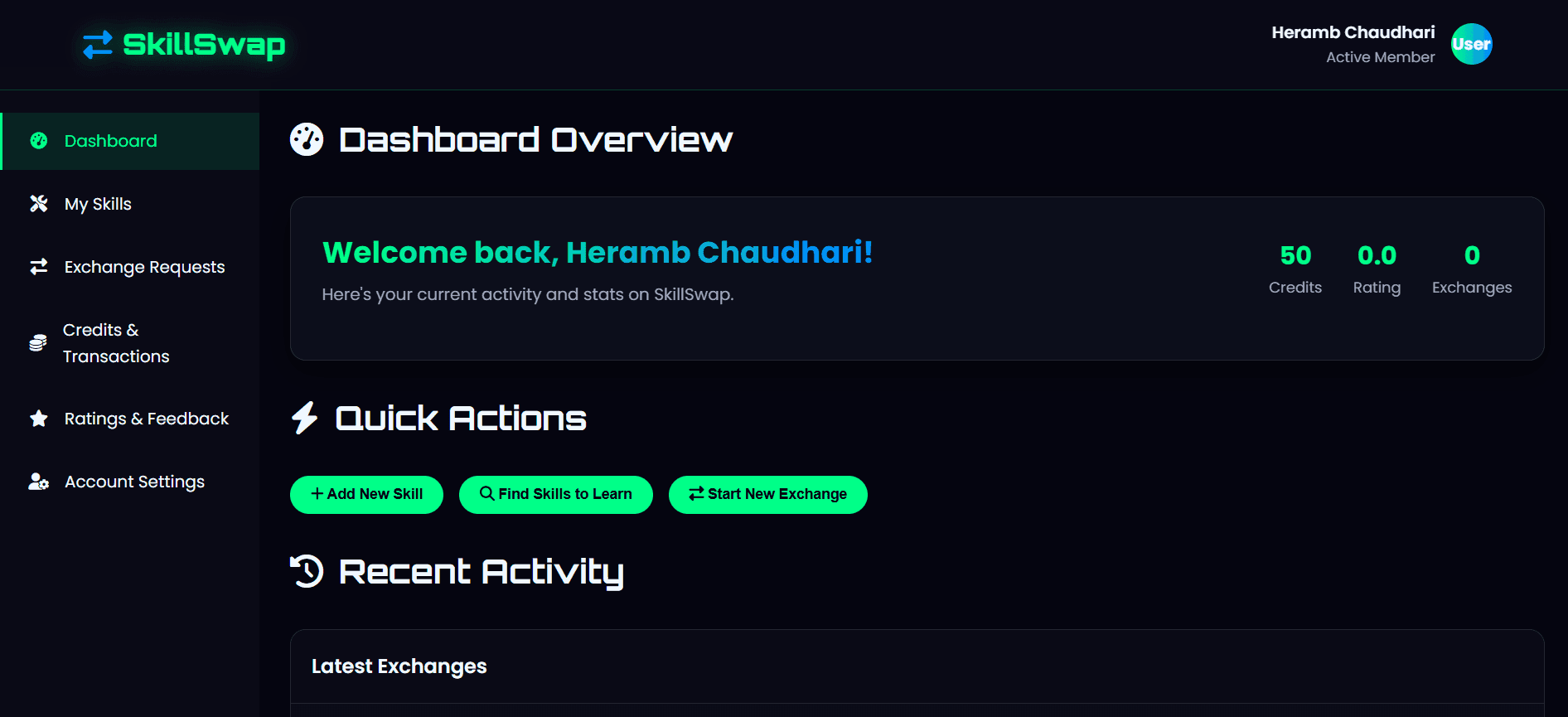
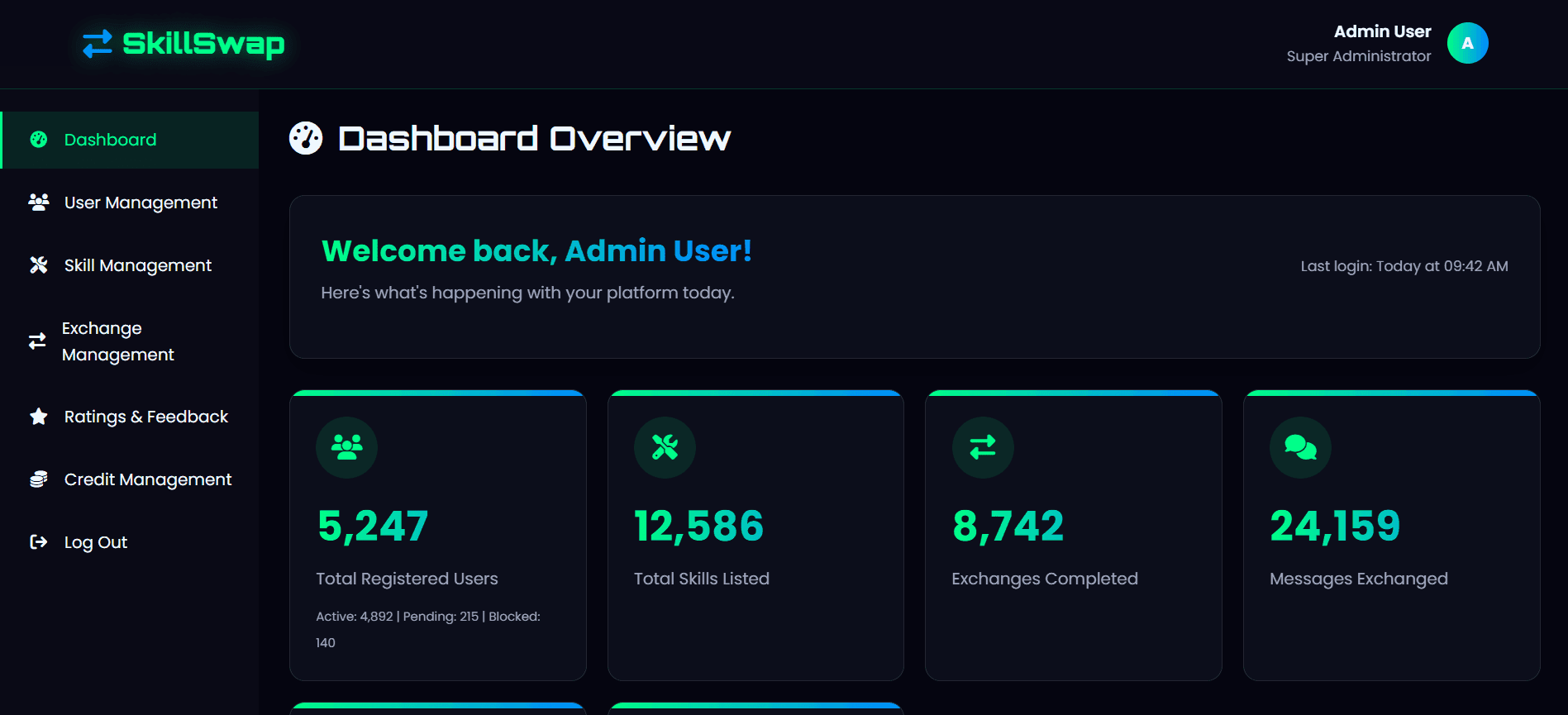
Key Metrics
Admin · User
Monolithic MVC Application
MySQL
Session-Based
Overview
SkillSwap is a peer-to-peer learning platform that enables users to exchange skills through a virtual credit economy. Users earn credits by teaching others, spend credits to learn new skills, submit exchange requests, leave ratings, and participate in a self-sustaining community without relying on direct monetary transactions.
Problem
Many people possess valuable skills they can teach and valuable skills they want to learn, but there is no structured system that enables flexible skill exchange without requiring direct barter arrangements or financial payments.
Solution
Built a platform that introduces a virtual credit-based economy where users earn credits by sharing expertise and spend credits to access learning opportunities, creating a scalable and flexible skill exchange ecosystem.
Architecture
Traditional Java enterprise architecture using Spring MVC for request routing, Hibernate ORM for persistence, MySQL for relational data storage, JSP for server-side rendering, and Apache Tomcat deployment. The application follows an MVC pattern with Controllers, DAO Layer, Hibernate ORM, and relational database integration.
Challenges
- Designing a virtual credit economy system.
- Modeling exchange lifecycle state transitions.
- Implementing multi-role authentication and authorization.
- Managing Hibernate session lifecycle and persistence.
- Designing normalized relational database schemas.
- Handling exchange requests and credit transactions.
- Building administrative moderation workflows.
Lessons Learned
- Spring MVC request lifecycle and DispatcherServlet internals.
- Hibernate ORM and session management.
- DAO architecture patterns.
- State machine modeling using enums.
- Relational database design and normalization.
- Transaction management concepts.
- Session-based authentication workflows.
- Enterprise Java application architecture.